The Blue Belt Action Plan: 5 Immediate Steps to Define and Master Your Jiu-Jitsu Game
Achieving the Blue Belt in Brazilian Jiu-Jitsu (BJJ) is a monumental accomplishment, signifying that you have moved past the initial chaos of the white belt and possess a functional understanding of the art. Congratulations! However, the moment the blue stripe is placed on your waist, your journey fundamentally changes. You are no longer just learning; you are now expected to execute, specialize, and teach.
Discover Start Jiu-Jitsu Pembroke Pines
1. Conduct a Brutal Self-Assessment: Define Your Weakest Links
The first thing a new Blue Belt must do is stop rolling randomly. You have earned the right to be strategic about your training. Before you step on the mat for your first roll as a Blue Belt, you must identify your major technical weaknesses.
The 80/20 Rule Analysis
Analyze your last three to six months of training. Where did you constantly get swept, passed, or submitted?
Weakness 1: Guard: Do you lose your guard immediately when facing a White Belt? Can you effectively recover your guard after a pass?
Weakness 2: Passing: Do you rely on explosive movement or strength to pass, only to fail against a heavier opponent?
Weakness 3: Escapes: Can you escape from Mount and Back Control with minimal effort, or do you have to panic-wrestle your way out?
Your new mission is to dedicate 80% of your focused training time to fixing these critical weaknesses. This deliberate focus prevents you from falling into the trap of only practicing what you are already good at.
Redefine Your “Win” Condition
As a White Belt, surviving the roll was a win. As a Blue Belt, surviving is the minimum expectation. Redefine success based on your weak link. If your Guard Passing is weak, a successful training session is one where you successfully complete one difficult guard pass, even if you are submitted five times afterward. This focused goal-setting is key to BJJ classes for advanced practitioners.
2. Design Your A-Game: The 3-Move Blueprint
The next step is to simplify your offensive repertoire. The Blue Belt knows 100 techniques; the Purple Belt masters 3 interconnected sequences. Your goal is to choose one dominant position and define the three primary actions you will use from it.
Choose Your Signature Position
Select one position that aligns with your body type and energy level, and commit to making it the most dangerous part of your game.
Body Type | Recommended A-Game Position | Primary Goal |
|---|---|---|
Lanky/Flexible | Spider Guard, Triangle Attacks | Distance Control and Submissions |
Stocky/Strong | Pressure Passing, Half Guard Top | Positional Control and Smashing Pressure |
Athletic/Fast | Transitions, Back Takes, Open Guard | Dynamic Movement and Seizing Opportunities |
The 3-Move Flowchart
Once the position is chosen, design a three-step sequence that dictates the fight:
Primary Sweep/Pass: The move you try first (e.g., Double Under Pass).
Submission from Control: The submission you hunt immediately after success (e.g., Arm-Triangle from Side Control).
Reactionary Move: The counter when your opponent defends the primary move (e.g., If they block the Double Under, switch immediately to a Toreando Pass).
Every time you roll, your mind should default to this single sequence. If you are training at Start Jiu-Jitsu in Pembroke Pines, ask your coach to help you structure this flow specific to your physical attributes.
3. Embrace Positional Sparring and Specific Drilling
Random free rolling is no longer sufficient for meaningful growth. As a Blue Belt, your training must become surgical and intentional.
The Power of Positional Sparring
Dedicate at least 50% of your rolling time to Positional Sparring. This means starting the roll from a pre-determined position (e.g., both kneeling, bottom of side control, or bottom of closed guard).
Isolate and Overcome: If you suck at escaping side control, spend an entire round starting there, with the only goal being escape. This deliberate repetition forces you to develop muscle memory in high-stress, targeted scenarios.
Drill with Resistance: When drilling techniques, practice the move at 50% resistance. The partner should actively try to prevent the move but without fully counter-attacking. This bridges the gap between static drilling and live rolling, preparing you for true resistance.
Re-Master the Fundamentals
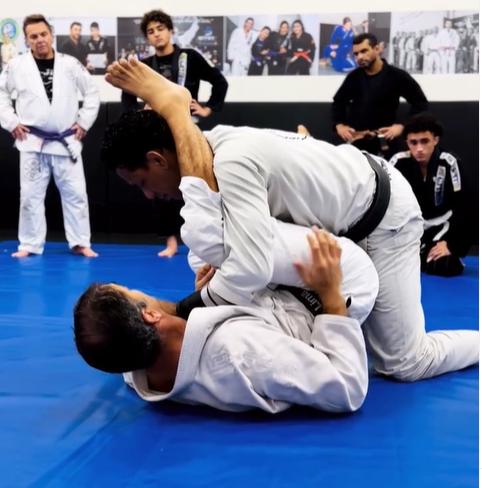
Ironically, the difference between a good Blue Belt and a great Purple Belt is often found in the basics: posture, base, and hip movement. Schedule time to drill your Hip Escapes, technical stand-ups, and bridging movements for 5 minutes before or after class. These fundamentals save energy and make all advanced techniques possible.
4. The Mental Game: Humility, Teaching, and Consistency
The mental challenges of the Blue Belt are often greater than the physical ones. You are now the target for motivated White Belts, and you are constantly struggling against higher belts.
Check Your Ego at the Door
As a White Belt, you were submitting no one. As a Blue Belt, you will start submitting beginners, and your ego will tempt you to rely on strength. Resist this urge!
Seek Out Losses: Actively seek to roll with Purple and Brown Belts. You will tap, but those taps are golden lessons. Their pressure and control will highlight the flaws in your structure better than any White Belt ever could.
Ask Targeted Questions: Stop asking, “What did I do wrong?” Ask, “When I tried the Arm-Triangle, I lost the angle here. Should I have shifted my weight sooner?” Specific questions yield specific, actionable advice from your instructors. Access to expert BJJ coaching is essential now more than ever.
Teach to Learn
The best way to solidify your foundational knowledge is to teach it. Take the time to help a White Belt with their first sweep or guard pass. When you teach, you must articulate the principles and mechanics clearly, which exposes any gaps in your own understanding. This is a crucial element of the Adult Brazilian Jiu-Jitsu journey.
5. Embrace Consistency Over Intensity
The ultimate requirement for achieving the Purple Belt is not talent, but time on the mat. The most consistent grappler always wins the race in the long run.
The Time Trap
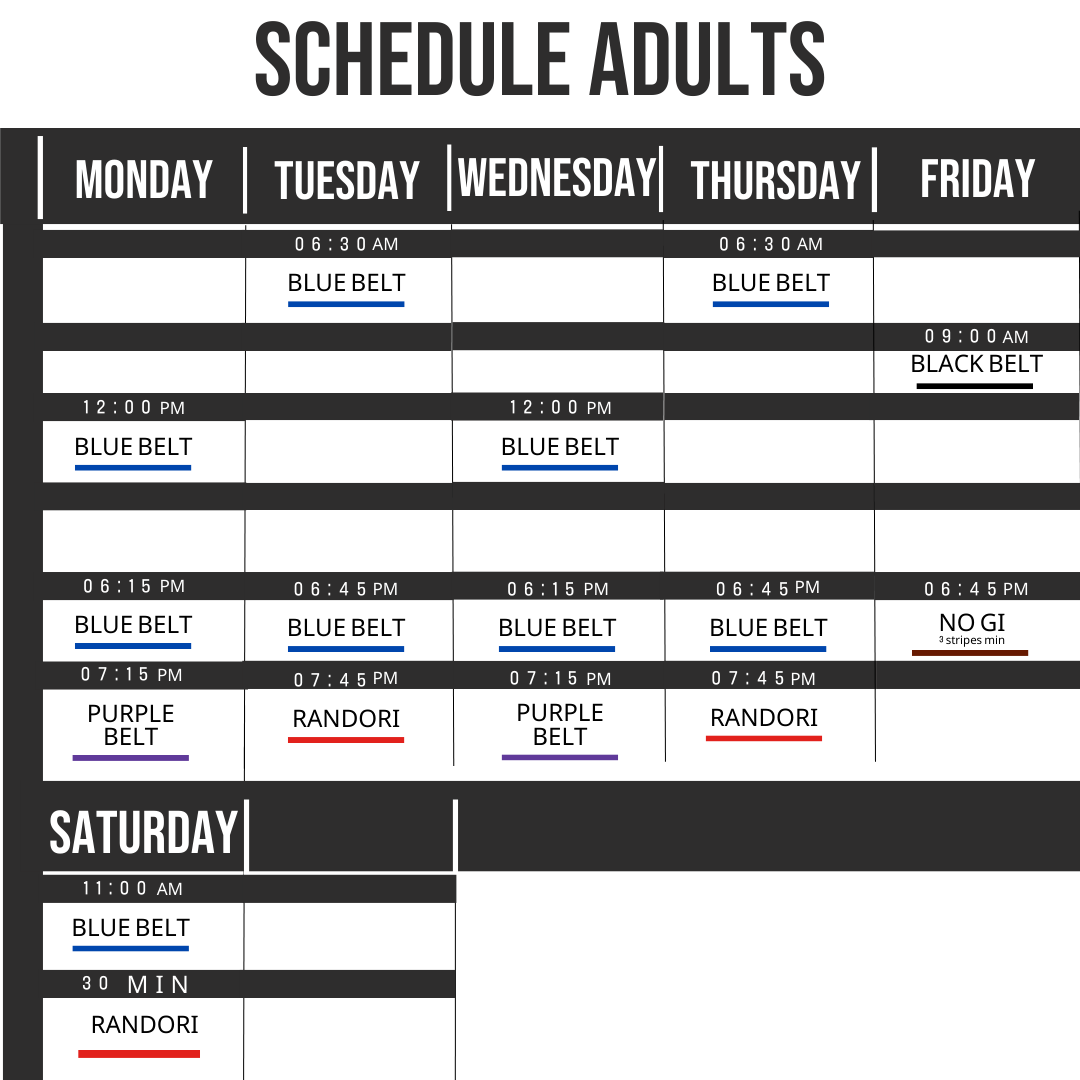
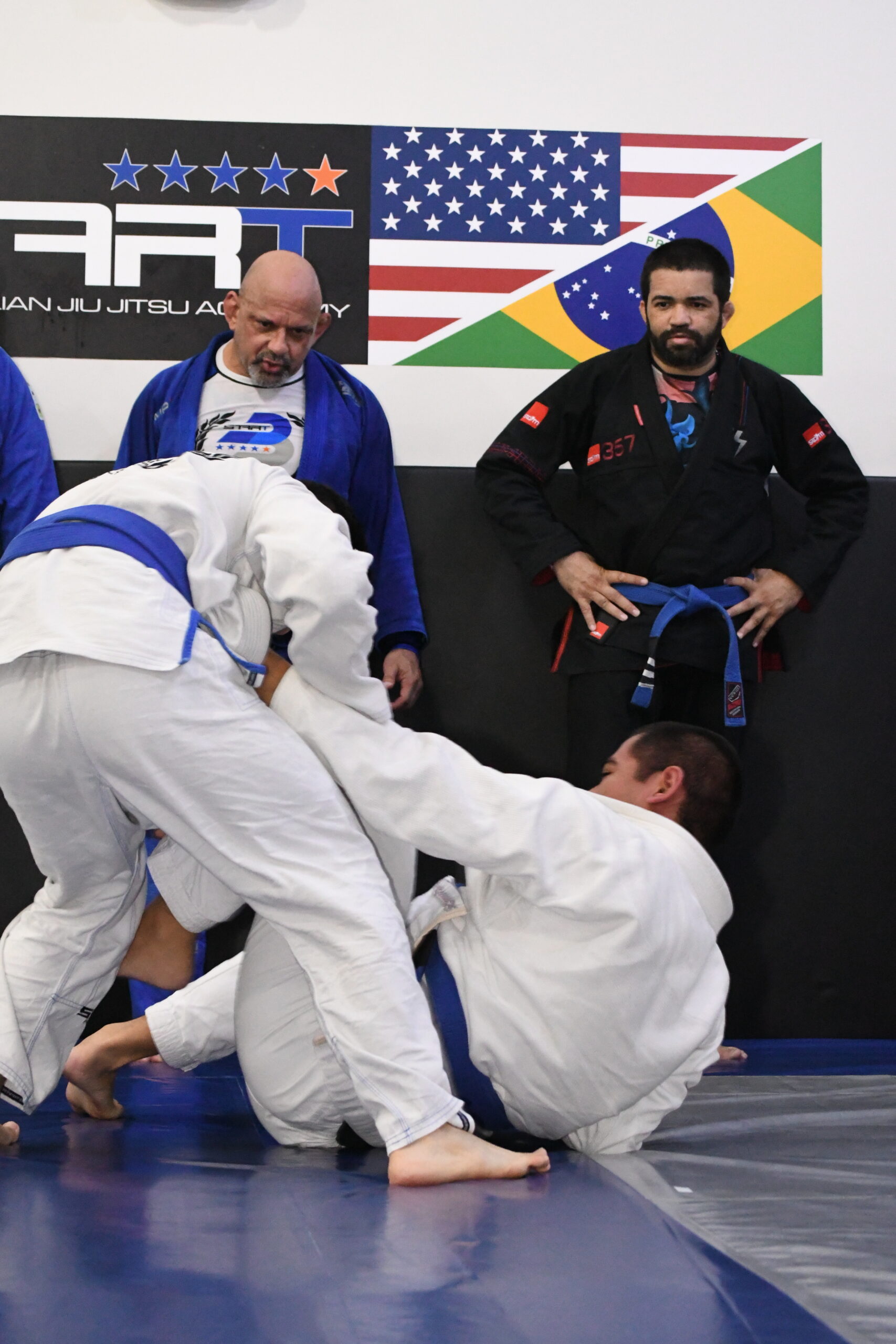
The minimum time to go from Blue to Purple Belt is 18 months, but the average is often closer to 3 years. This requires patience and a commitment to showing up 3–4 times per week, even when you feel stuck or defeated.
Injury Prevention: Now that you are rolling with more resistance, prioritize recovery. Listen to your body, train smartly, and address small injuries quickly to prevent long layoffs. Remember that BJJ is a marathon, not a sprint.
Discover Start Jiu-Jitsu Pembroke Pines
The Blue Belt phase is your opportunity to stop being a generalist and become a specialist. By adopting this focused action plan, you will build a personal BJJ game that is efficient, effective, and ready for the next level.
If you are ready to apply this plan and take your Jiu-Jitsu to the next level, Start Jiu-Jitsu in Pembroke Pines is ready to guide you. Schedule your first BJJ class in Pembroke Pines as a Blue Belt today and commit to the process of mastery. Find out more about our focused training programs at Start Jiu-Jitsu.